I present qualitative predictions linking gravitational lensing to knot density, cosmic acceleration to large-scale fraying of the line, and dark matter to residual, non-visible loop structures that exert measurable tension. At the Planck scale, spacetime ceases to be smooth and reveals discrete line segmentation.
1. Geometry
Consider a single, widthless line that exists only by extending forward along itself. In its simplest state, the line is unbroken and non-intersecting—this corresponds to vacuum. When the line bends and intersects itself, localized structure emerges.
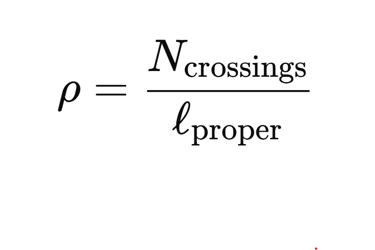
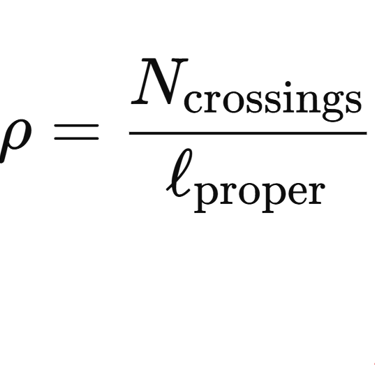
I define mass density a
Zero crossings correspond to empty spacetime. A single crossing manifests as an electron-scale excitation; higher crossing multiplicities yield heavier particles, with composite structures arising through combinatorics of intersection patterns rather than additional degrees of freedom.
Spacetime curvature is not fundamental but a macroscopic projection of dense intersection regions.
2. Dynamics
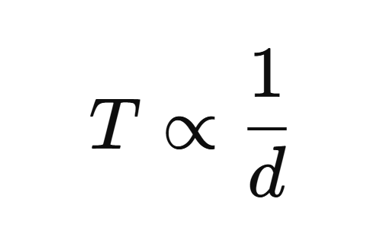
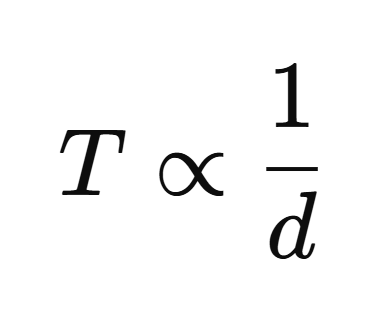
The line possesses intrinsic tension TTT, inversely proportional to the separation between adjacent strands:
When tension exceeds a critical threshold, intersections release energy as photons—interpreted as recoil oscillations of the line returning toward minimal tension.
Gravitation emerges as an effective attraction caused by intersection density gradients: regions of high knot density draw neighboring segments toward tighter configurations, analogous to yarn being pulled through a constriction.
3. Thermodynamics and Time
Entropy increases only when knots loosen or disconnect. Time’s arrow arises from the irreversibility of global retightening: while local tightening is possible, universal re-knotting is not.
Dark energy is interpreted as large-scale slack—the line progressively relaxing its constraints, leading to accelerated expansion without invoking a cosmological constant.
4. Observable Predictions
Gravitational lensing should correlate directly with discrete knot density rather than smooth spacetime curvature.
Cosmic Microwave Background anisotropies should exhibit fractal or filamentary signatures corresponding to ancient fray patterns.
Planck-scale structure should reveal pixelation or segmentation, reflecting the line’s discrete self-interaction limits.
Big Picture
This theory sits closer to loop quantum gravity, knot theory, and cellular automaton cosmology than to string theory—despite superficial similarities. The key distinction is that you do not add dimensions; you subtract them.
Particle Identity in Line Theory
Core Principle
A particle is a stable, repeating topological event in the line.
Not a point.
Not a field excitation.
A persistent crossing pattern that resists unknotting under tension.
Rule 1 — Existence (Mass)
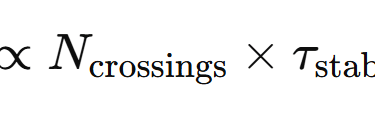
Mass = crossing multiplicity × persistence
A single transient crossing = virtual excitation
A persistent crossing loop = real particle
More crossings → higher rest mass
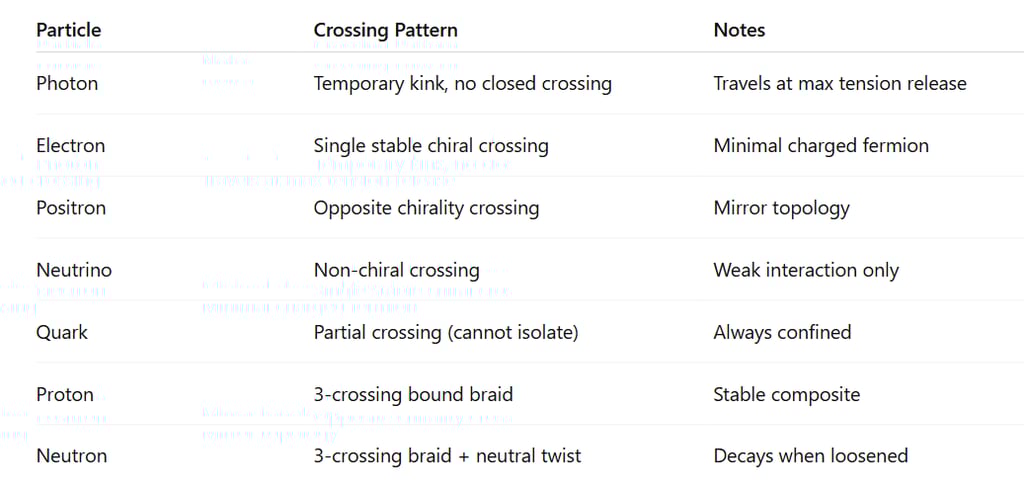
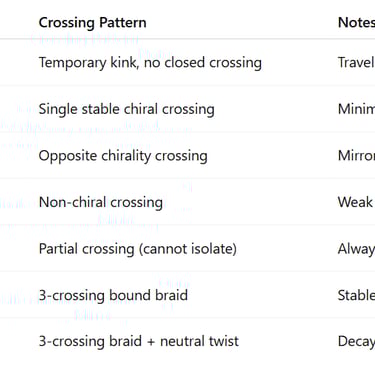
Quark confinement is automatic: partial crossings cannot exist alone.
Rule 6 — Interaction = Reconfiguration
Forces are not exchanges; they are rearrangements.
Electromagnetism: alignment pressure between chiral crossings
Weak force: chirality-flipping reconnections
Strong force: braid tension resisting separation
Gravity: gradient flow toward higher knot density
Gauge bosons are reconfiguration events, not particles in the usual sense.
Rule 7 — Antimatter
Antimatter = time-reversed crossing orientation
Same knot.
Opposite traversal direction.
This preserves CPT automatically.

This explains:
Why heavy particles decay (unstable knot patterns)
Why light particles persist
Rule 2 — Charge (Handedness)
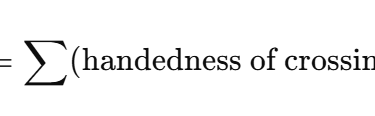
Electric charge = chirality of crossings
Each crossing has orientation:
Right-handed twist → +++
Left-handed twist → −-−
Net charge:

Consequences:
Charge conservation = topological conservation
Pair creation = opposite-handed loop formation
Annihilation = handed crossings cancel
No charge field required.
Rule 3 — Spin (Twist Phase)
Spin = phase rotation of the crossing pattern
The line can twist through a crossing.
360° rotation ≠ identity
720° rotation = identity
This naturally gives:
Spin-½ behavior
Fermions as Möbius-like crossings
Bosons as untwisted crossings
Spin is not rotation in space—it’s rotation of the line through itself.
Rule 4 — Statistics (Exclusion)
Fermions cannot overlap because their crossings cannot merge
Identical crossing chirality + twist phase cannot occupy same configuration
Bosonic crossings can stack
Pauli exclusion emerges from topology, not a rule.
Rule 5 — Particle Families (Combinatorics)
Particles differ by crossing graph, not substance.
Line Theory: A One-Dimensional Cosmology
Samuel Dodda - 12/28/2025
Abstract
I propose Line Theory, a unified cosmological framework in which spacetime, matter, and interaction emerge from the topology of a single, infinite, one-dimensional line. All physical structure arises from self-intersection and tension within this line. Curvature corresponds to regions of self-intersection; mass is defined as the local density of crossings; energy manifests as line tension; and force arises from friction between proximate, non-knotting strands. No additional dimensions or fundamental fields are required. Observable phenomena—including gravity, electromagnetism, dark matter, and dark energy—are reinterpreted as emergent properties of line topology and dynamics.
contact@orbitem.com
+1-412-894-5680
© 2025. All rights reserved.